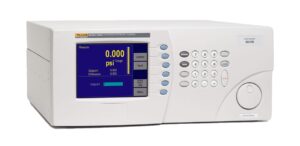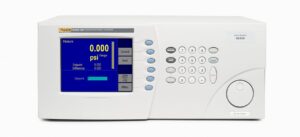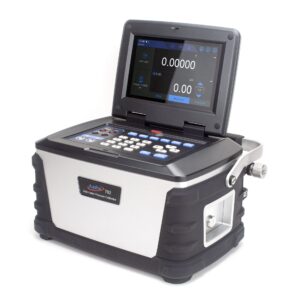
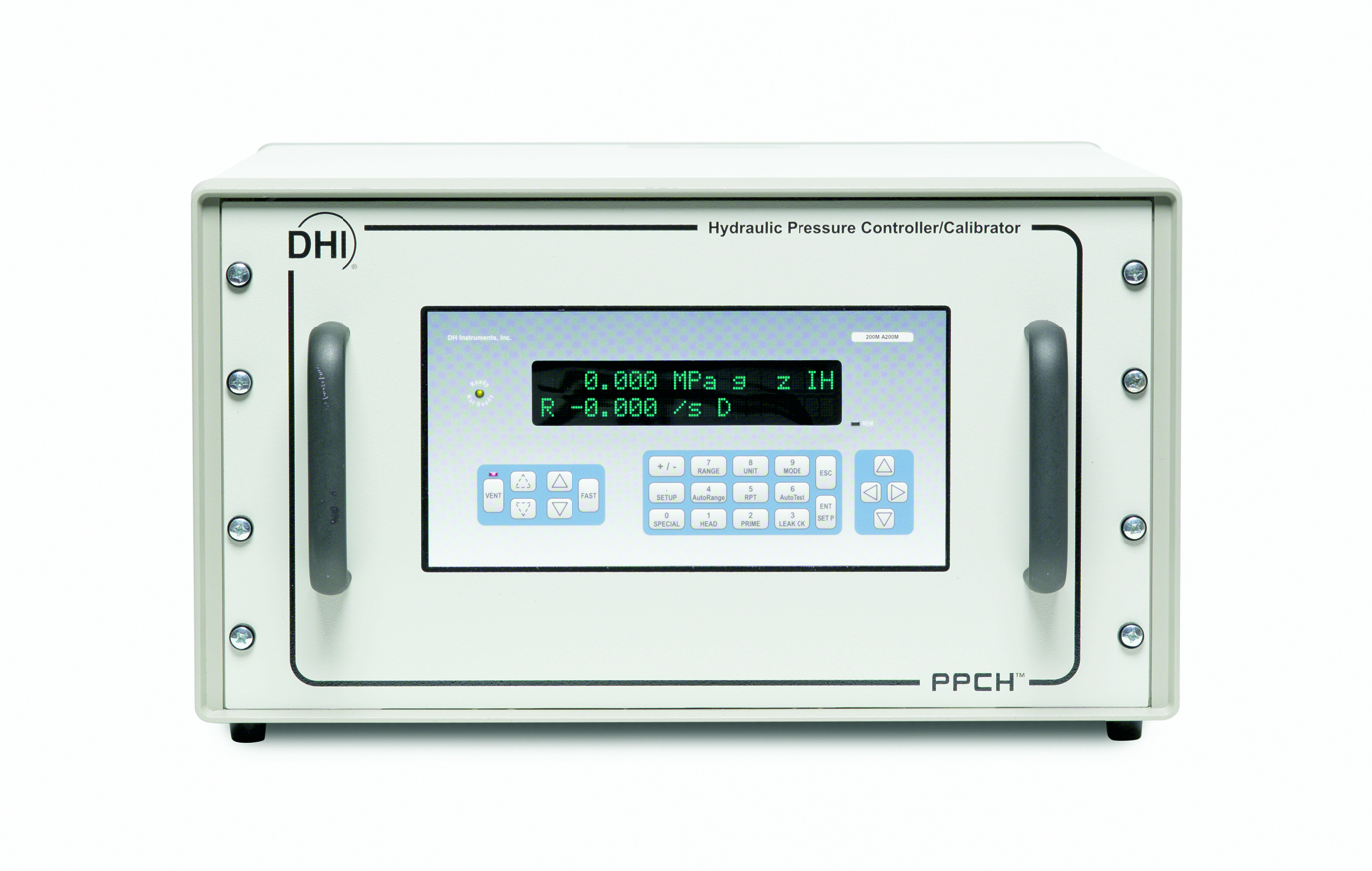
Fluke Calibration PPCH is a precise automated hydraulic pressure controller and calibrator designed for high-pressure liquid applications from 1 to 200 MPa (150 to 30,000 psi / approximately 10 to 2,000 bar). Combining automatic pressure generation, high-resolution pressure control, Q-RPT quartz reference pressure transducer technology and flexible automation functions, the PPCH is an advanced solution for professional high-pressure calibration laboratories, pressure sensor manufacturers, research facilities and automated production testing.
Unlike pneumatic pressure controllers, the PPCH operates with a liquid pressure medium. Standard operation uses sebacate oil, while other fluids can be considered for special applications in consultation with Fluke Calibration.
The system provides automated hydraulic pressure generation and control up to 200 MPa (30,000 psi). This eliminates much of the manual effort traditionally associated with high-pressure hydraulic calibration using hand pumps, screw presses or manual pressure intensifiers.
The Fluke Calibration PPCH is available in maximum pressure configurations of 70 MPa, 100 MPa, 140 MPa and 200 MPa, corresponding to 10,000 psi, 15,000 psi, 20,000 psi and 30,000 psi.
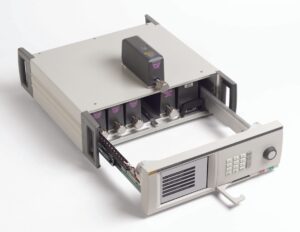
High-accuracy pressure measurement is provided by Fluke Calibration Q-RPT – Quartz Reference Pressure Transducer modules. Depending on the configuration, one or two Q-RPTs can be installed internally. External Q-RPTs installed in an RPM4 Reference Pressure Monitor can also be integrated into the PPCH system.
This open architecture allows the reference pressure measurement to be located either inside the controller or closer to the device under test.
At europascal, we provide professional pressure calibration solutions ranging from portable pressure calibrators and pneumatic pressure controllers to hydraulic high-pressure systems, piston gauges and complete automated calibration workstations.
For professional calibration and metrological traceability of pressure controllers, pressure sensors and high-pressure measuring equipment, use the europascal Calibration Service.
Your Benefits at a Glance
- Automated hydraulic pressure controller and calibrator
- Liquid pressure operation
- Pressure generation from 1 to 200 MPa
- Pressure range from 150 to 30,000 psi
- Maximum pressure approximately 2,000 bar
- 70 MPa / 10,000 psi configuration
- 100 MPa / 15,000 psi configuration
- 140 MPa / 20,000 psi configuration
- 200 MPa / 30,000 psi configuration
- Q-RPT quartz reference pressure transducers
- Up to two internal Q-RPT modules
- External Q-RPT integration via RPM4
- Open reference measurement architecture
- AutoRange function
- Infinite Ranging capability
- 10:1 pressure control turndown
- Dynamic pressure control
- Static pressure control
- Monotonic pressure control
- Programmable ramp control
- Piston gauge control mode
- Control precision to ±0.003 % of Q-RPT span
- Measurement resolution down to 1 ppm
- Intelligent AutoZero
- Automatic fluid head correction
- Programmable calibration sequences
- Automated leak testing
- 16 SI and US pressure units
- RS-232 communication
- IEEE-488.2 communication
- Suitable for automated high-pressure calibration
Hydraulic Pressure Generation up to 30,000 psi
The Fluke Calibration PPCH is specifically designed for automated hydraulic high-pressure calibration.
Its operating range extends from approximately:
1 MPa
to:
200 MPa
or:
150 psi to 30,000 psi
The maximum pressure corresponds to approximately:
2,000 bar
This pressure capability makes the PPCH suitable for demanding high-pressure applications that exceed the ranges of many conventional pneumatic pressure controllers.
Typical devices under test include:
- High-pressure sensors
- Pressure transducers
- Pressure transmitters
- Digital pressure gauges
- Mechanical pressure gauges
- Reference pressure transducers
- Industrial high-pressure instrumentation
Four Maximum Pressure Configurations
The Fluke Calibration PPCH can be configured according to the maximum required pressure.
Available controller configurations include:
PPCH-70M
Maximum controlled pressure:
70 MPa / 10,000 psi / approximately 700 bar
PPCH-100M
Maximum controlled pressure:
100 MPa / 15,000 psi / approximately 1,000 bar
PPCH-140M
Maximum controlled pressure:
140 MPa / 20,000 psi / approximately 1,400 bar
PPCH-200M
Maximum controlled pressure:
200 MPa / 30,000 psi / approximately 2,000 bar
This allows the controller to be selected according to the actual high-pressure workload.
Automatic Hydraulic Pressure Generation
Traditional high-pressure hydraulic calibration often requires considerable manual effort.
Manual pumps and pressure intensifiers must be operated repeatedly, while fine adjustment devices are required to reach the desired pressure accurately.
The Fluke Calibration PPCH automates this process.
The system generates the required hydraulic pressure and automatically approaches the selected setpoint.
This provides major advantages when many calibration points or repetitive pressure sequences are required.
Q-RPT Quartz Reference Pressure Transducers
The outstanding pressure measurement performance of the PPCH is based on Fluke Calibration Q-RPT technology.
Q-RPT stands for:
Quartz Reference Pressure Transducer
The sensor determines pressure by measuring the change in the natural oscillation frequency of a quartz crystal caused by pressure-induced mechanical stress.
Individual transducers are characterized before they are selected for use as reference pressure transducers.
The resulting system provides excellent:
- Linearity
- Repeatability
- Stability
- Resolution
- Long-term measurement performance
Q-RPT technology makes the PPCH suitable for demanding calibration and transfer-standard applications.
Available Q-RPT Pressure Ranges
Several Q-RPT ranges are available for the Fluke Calibration PPCH.
These include:
- A20M – 20 MPa / 3,000 psi
- A40M – 40 MPa / 6,000 psi
- A70M – 70 MPa / 10,000 psi
- A100M – 100 MPa / 15,000 psi
- A140M – 140 MPa / 20,000 psi
- A200M – 200 MPa / 30,000 psi
The A100M, A140M and A200M modules are available only in the high Q-RPT position.
The low Q-RPT position uses a range of A70M or lower.
This enables a PPCH system to combine pressure ranges for improved measurement performance over the required workload.
Excellent Measurement Performance
For Q-RPT ranges below A200M, Fluke specifies precision of:
±0.012 % of reading
For the A200M Q-RPT, precision is:
±0.015 % of reading
Predicted one-year stability is:
±0.005 % of reading
for both configurations when the AutoZero function is used as specified.
Delivered measurement uncertainty for Q-RPTs below A200M is:
±0.013 % of reading
For the A200M Q-RPT, delivered measurement uncertainty is:
±0.018 % of reading
The percent-of-reading specifications apply from 30 % to 100 % of the selected Q-RPT span. Below 30 %, the corresponding 30 % span value is used.
Dynamic Pressure Uncertainty
When the PPCH is actively controlling pressure in dynamic mode, the complete pressure uncertainty includes both measurement uncertainty and the dynamic control contribution.
Fluke specifies pressure uncertainty in dynamic control mode of:
±0.016 % of reading
for Q-RPTs below A200M.
For the A200M range, the corresponding specification is:
±0.020 % of reading
These values apply under the manufacturer’s specified conditions and over the defined portion of the Q-RPT range.
High-Resolution Pressure Control
The Fluke Calibration PPCH provides pressure control precision to:
±0.003 % of Q-RPT span
The controller offers a pressure control turndown of:
10:1
This allows the hydraulic pressure generation system to be adapted to different calibration ranges.
Measurement resolution is user-adjustable down to:
1 ppm
This combination of measurement resolution and automatic pressure control makes the PPCH suitable for high-performance hydraulic pressure calibration.
AutoRange Function
One of the important features of the Fluke Calibration PPCH is AutoRange.
The AutoRange function automatically adapts the controller to the pressure range of the device under test.
Instead of operating every test using the complete maximum range of the controller, AutoRange optimizes relevant parameters for the selected DUT range.
This includes aspects of:
- Pressure measurement
- Pressure control
- Resolution
- Ready criteria
- Safety limits
- Test parameters
This simplifies operation when the same PPCH is used to calibrate devices with very different pressure ranges.
Infinite Ranging
Fluke Calibration refers to the broad adaptability of the PPCH as Infinite Ranging.
True rangeability involves more than simply specifying measurement uncertainty as a percentage of reading.
The pressure controller must also adapt its control characteristics and operating parameters to the device under test.
The PPCH combines Q-RPT measurement technology with AutoRange to optimize operation for the selected calibration range.
This enables one controller to cover a wide variety of high-pressure devices.
Open Measurement Architecture
The Fluke Calibration PPCH provides a flexible open architecture.
Reference pressure measurement can be:
- Integrated into the PPCH
- Located externally
- Positioned closer to the device under test
A PPCH can be configured with one or two internal Q-RPT modules.
Alternatively, external Q-RPTs can be installed in an RPM4 Reference Pressure Monitor.
The PPCH then manages the external Q-RPT as part of the pressure control system.
This architecture can be particularly useful when the reference sensor needs to be removed separately for recalibration while the controller remains installed.
PPCH without Internal Q-RPT
The PPCH can also be configured without an internal Q-RPT.
In this configuration, a lower-cost utility sensor provides basic pressure indication and control capability.
An external RPM4 containing the required Q-RPT can then provide the reference pressure measurement.
Another possible application is using the PPCH primarily as an automatic hydraulic pressure generation and control system.
This provides considerable flexibility when designing specialized high-pressure calibration systems.
Dynamic Control Mode
In Dynamic Mode, the PPCH automatically reaches the target pressure and continuously adjusts pressure to maintain the selected setpoint.
This mode is useful when pressure must remain actively controlled during measurement.
Small changes caused by factors such as temperature or system behavior are automatically compensated by the controller.
Static Control Mode
In Static Mode, the PPCH generates the target pressure within the defined hold limit and then stops active control.
The hydraulic system is allowed to stabilize naturally.
This mode can be advantageous for high-accuracy measurements where continuous control activity is undesirable.
Monotonic Control Mode
The Monotonic Mode is designed for applications where pressure should approach the target while maintaining a very slow pressure change in the same direction as the original pressure increment.
This specialized mode provides additional flexibility for demanding pressure calibration procedures.
Ramp Control Mode
The PPCH also provides a programmable Ramp Mode.
The user defines the required rate of pressure change.
The controller then generates and maintains the specified pressure ramp.
This can be useful for:
- Pressure sensor characterization
- Pressure switch testing
- Dynamic pressure testing
- Component testing
- Research applications
Piston Gauge Control
The Fluke Calibration PPCH can also be integrated into automated piston gauge systems.
In Piston Gauge Mode, a compatible piston gauge system can control the PPCH.
For example, the PPCH can provide automated hydraulic pressure generation for a PG7000-series piston gauge system.
This eliminates much of the manual pressure generation normally required when operating a high-pressure piston gauge.
Automatic Fluid Head Correction
Hydraulic pressure measurements are affected by differences in vertical height.
Because the pressure medium has a much higher density than gas, fluid head correction can be particularly significant in hydraulic pressure calibration.
The Fluke Calibration PPCH therefore provides automatic fluid pressure head correction.
This enables the pressure indication to be corrected for the vertical distance between the reference level and the device under test.
Correct reference-level definition is essential for high-accuracy hydraulic pressure calibration.
Intelligent AutoZero
The PPCH includes an intelligent AutoZero function.
Regular zeroing helps maintain the measurement performance of the Q-RPT reference sensors.
In gauge pressure mode, AutoZero can occur automatically when the system is vented.
For absolute pressure operation, a suitable barometric reference can be used for the AutoZero process.
This function contributes to the excellent long-term stability specifications of the Q-RPT system.
Automated Calibration Sequences
The Fluke Calibration PPCH can store and execute programmable calibration sequences.
This allows frequently used pressure calibration procedures to be automated directly from the controller.
The system can also perform DUT tolerance testing.
This can reduce operator workload during repetitive calibration tasks.
A remote ENTER footswitch can be used for hands-free execution of test steps.
Automated Leak Testing
High-pressure hydraulic systems must be sufficiently leak-tight to achieve stable pressure.
The PPCH therefore includes automated leak testing routines.
These functions help evaluate the pressure system before or during calibration.
Leak testing can help identify problems with:
- Pressure fittings
- Tubing
- Adapters
- Devices under test
- Seals
- Test connections
This can improve both calibration efficiency and measurement reliability.
Pressure Medium
The standard operating medium for the Fluke Calibration PPCH is:
Sebacate oil
Other operating fluids may be available for special applications in consultation with Fluke Calibration.
The internal reservoir volume is:
250 cc
An external reservoir can also be used.
Correct fluid selection is important for both measurement performance and compatibility with the device under test.
Calibration of High-Pressure Sensors
The PPCH is particularly suitable for calibration and characterization of high-pressure sensors.
The controller automatically generates the required pressure while the Q-RPT provides the reference measurement.
An external data acquisition system can simultaneously record the electrical output of the sensor.
Typical characteristics that can be evaluated include:
- Zero
- Span
- Linearity
- Repeatability
- Hysteresis
- Pressure sensitivity
Automatic pressure generation is especially useful when many measurement points or repeated pressure cycles are required.
Calibration of Pressure Transmitters
High-pressure transmitters can also be calibrated using the Fluke Calibration PPCH.
The PPCH generates and measures the hydraulic reference pressure.
Suitable electrical measurement equipment measures the transmitter output.
Typical transmitter outputs include:
- 4–20 mA
- DC voltage
- Digital signals
Automated pressure control significantly reduces manual effort when multiple calibration points must be tested.
Calibration of Pressure Gauges
The PPCH can be used for automatic calibration of high-pressure mechanical and digital pressure gauges.
A typical calibration sequence includes increasing and decreasing pressure points.
The gauge indication is compared with the reference pressure measured by the Q-RPT.
Depending on the calibration procedure, the results can be used to evaluate:
- Indication deviation
- Repeatability
- Hysteresis
- Zero deviation
RS-232 and IEEE-488 Communication
The Fluke Calibration PPCH provides interfaces for automated operation.
Communication ports include:
- RS-232
- IEEE-488.2
These interfaces allow the PPCH to be integrated into computer-controlled calibration systems.
Automated software can control:
- Pressure setpoints
- Control modes
- Pressure sequences
- Measurement acquisition
- Leak testing
- Calibration procedures
Technical Highlights
The Fluke Calibration PPCH combines automatic hydraulic pressure generation with high-performance Q-RPT reference measurement:
- Hydraulic Pressure Controller / Calibrator
- Automatic liquid pressure generation
- Pressure range from 1 to 200 MPa
- 150 to 30,000 psi
- Approximately 10 to 2,000 bar
- 70 MPa configuration
- 100 MPa configuration
- 140 MPa configuration
- 200 MPa configuration
- Q-RPT quartz reference pressure transducers
- Up to two internal Q-RPTs
- External Q-RPT support via RPM4
- AutoRange
- Infinite Ranging
- 10:1 pressure control turndown
- Control precision to ±0.003 % Q-RPT span
- Resolution to 1 ppm
- Dynamic control
- Static control
- Monotonic control
- Ramp control
- Piston gauge control
- Intelligent AutoZero
- Automatic fluid head correction
- Automated leak testing
- Programmable calibration sequences
- RS-232
- IEEE-488.2
Technical Specifications
| Feature | Fluke Calibration PPCH |
|---|---|
| Manufacturer | Fluke Calibration |
| Model | PPCH |
| Device type | Hydraulic Pressure Controller / Calibrator |
| Pressure range | 1 to 200 MPa |
| US pressure range | 150 to 30,000 psi |
| Approximate SI range | 10 to 2,000 bar |
| Maximum configurations | 70 / 100 / 140 / 200 MPa |
| Reference technology | Q-RPT quartz pressure transducers |
| Internal Q-RPTs | Up to 2 |
| External reference | RPM4 Q-RPT supported |
| Q-RPT ranges | 20 to 200 MPa |
| Q-RPT precision | ±0.012 % reading; A200M ±0.015 % reading |
| Predicted one-year stability | ±0.005 % of reading |
| Delivered measurement uncertainty | Down to ±0.013 % of reading |
| Dynamic pressure uncertainty | Down to ±0.016 % of reading |
| Control precision | ±0.003 % of Q-RPT span |
| Control turndown | 10:1 |
| Lowest specified controllable pressure | 1 MPa / 150 psi |
| Resolution | Up to 1 ppm |
| Standard operating medium | Sebacate oil |
| Internal reservoir | 250 cc |
| Control volume | 0 to 100 cc; 50 cc optimum |
| Typical control speed | 180 s for specified 20 % FS excursion |
| Operating modes | Gauge and absolute |
| Pressure units | 16 SI and US units |
| Communication | RS-232 and IEEE-488.2 |
| Operating temperature | 15 °C to 35 °C |
| Dimensions | 30 × 52 × 50 cm |
| Weight | Approx. 50 kg |
| Rack version | 6U |
| Power | 85–264 VAC, 50/60 Hz, max. 75 W |
Why Choose the Fluke Calibration PPCH?
The Fluke Calibration PPCH is designed for laboratories and production environments that require automated hydraulic pressure generation at pressures beyond the practical operating range of many pneumatic controllers.
With a maximum pressure of 200 MPa (30,000 psi / approximately 2,000 bar), the PPCH covers demanding high-pressure calibration and testing applications.
Automatic hydraulic pressure generation eliminates much of the manual work traditionally associated with high-pressure liquid systems.
The system’s Q-RPT quartz reference pressure transducers provide excellent measurement performance, with delivered measurement uncertainty down to ±0.013 % of reading for suitable configurations.
AutoRange automatically adapts important measurement and control parameters to the range of the device under test.
The open measurement architecture allows Q-RPT reference sensors to be installed internally or remotely in an RPM4 Reference Pressure Monitor.
Four different pressure control modes provide flexibility for calibration, sensor characterization and specialized testing applications.
Integration with compatible piston gauges further expands the PPCH into primary and high-level reference pressure systems.
Automatic fluid head correction, intelligent AutoZero, programmable calibration sequences and automated leak testing simplify demanding high-pressure calibration procedures.
RS-232 and IEEE-488.2 interfaces support integration into automated laboratory and production systems.
For calibration laboratories, pressure sensor manufacturers and research facilities requiring automatic hydraulic pressure generation up to 30,000 psi, the Fluke Calibration PPCH provides a highly capable combination of pressure generation, precision measurement and automated control.
At europascal, we can assist you in selecting the appropriate PPCH maximum pressure configuration, Q-RPT ranges, pressure medium, RPM4 reference system and accessories for your individual high-pressure calibration requirements.
For professional calibration and metrological traceability of hydraulic pressure controllers, pressure sensors, transmitters and other high-pressure measuring equipment, use the europascal Calibration Service.
Discover more Fluke Calibration products here.
Manufacturer information about the Fluke Calibration PPCH is available on the official Fluke Calibration PPCH product page.